
Your cart is currently empty!
AI Design Imagination and the Future of Space

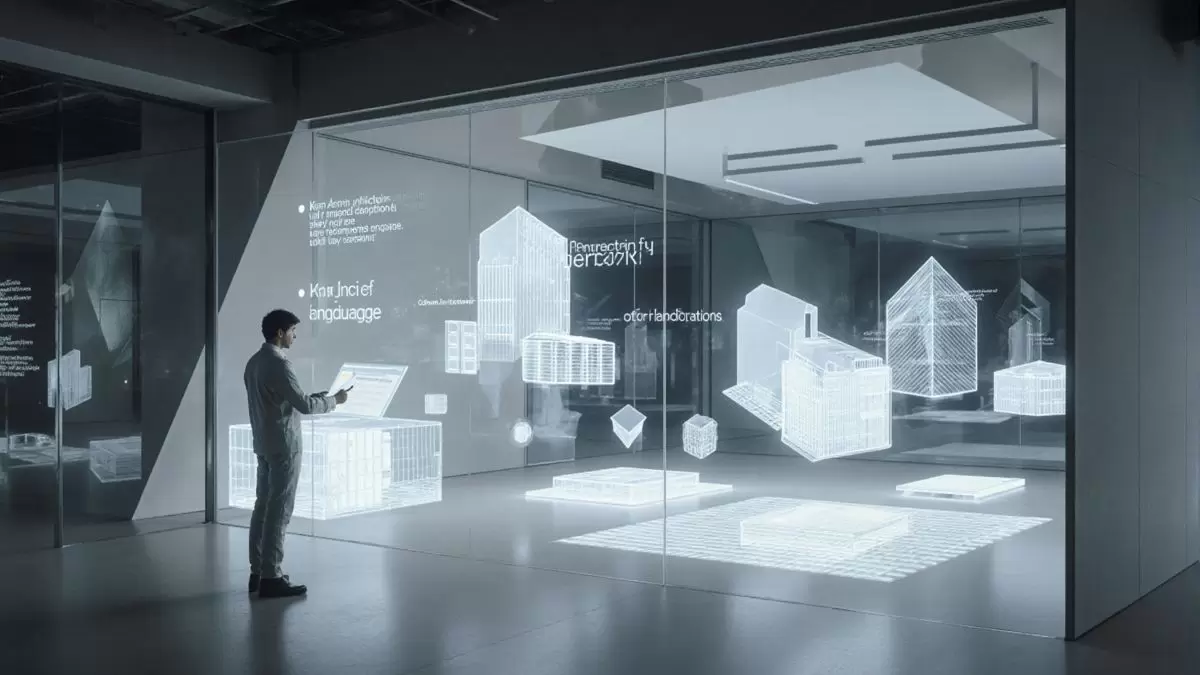
Artificial intelligence is redefining how architects imagine and shape space. Beyond rendering images, it opens a deeper layer of creative analysis by testing light, form, and human experience through data-driven exploration. Generative tools can now simulate thousands of possibilities before the first line is drawn, transforming early design into a discovery process rather than repetition. This expansion of design intelligence marks a profound shift, where imagining space is no longer isolated to human intuition but shared with algorithms that can perceive relationships too complex for conscious reasoning.
What Drives the Intelligence Behind Form Generation?
Machine learning enables architects to precisely understand relationships among materials, light, and spatial flow. By analyzing patterns across vast data sets, AI reveals efficiencies invisible to traditional methods. When design conditions such as orientation or comfort are introduced, the system proposes options that balance performance and beauty. These are not arbitrary outputs but data-informed visual hypotheses that test structure, proportion, and sustainability in a single iteration.
Researchers at institutions such as MIT’s Senseable City Lab and ETH Zurich’s Digital Building Technologies Group are already applying these systems to complex urban and structural challenges. They have demonstrated that AI-driven optimization can reduce energy demand by up to 25% in adaptive façade systems and improve structural material efficiency by nearly 15%. These findings validate how algorithmic imagination enhances ecological and economic performance while merging artistry with measurable intelligence.
How Do Architects Guide Machine Creativity?
Architects now act as curators of machine intuition. Rather than seeing automation as competition, they use it as a partner in exploration. Every dataset and input prompt is a conceptual sketch, allowing AI to generate alternative paths. Yet, these alternatives do not exist in isolation because they depend on the designer’s intent, who shapes and refines the results according to human context, culture, and meaning.
In many studios experimenting with generative design, the architect’s role has shifted toward defining frameworks rather than outputs. The most effective practitioners are those who understand how to instruct algorithms with clarity of vision, ensuring that computation serves the concept rather than dictating it. The ability to design prompts, filter outputs, and interpret patterns is becoming as fundamental as sketching once was. This evolution represents a new form of authorship that blends human narrative with machine logic.
How Will AI Shape Responsive and Data-Rich Environments?
Artificial intelligence extends its influence from the studio to the scale of the city. In contemporary urban experiments, AI continuously processes environmental simulations such as sunlight distribution, thermal comfort, and pedestrian flow to propose configurations that respond to real-time conditions. Such systems transform static master plans into living frameworks that adapt to people’s behavior and climate rhythms.
When combined with sensor networks, predictive algorithms can simulate how a district breathes and evolves. For example, by integrating crowd movement data, AI can suggest pedestrian corridors that reduce congestion while enhancing social interaction. This makes AI design imagination a creative tool and an operational intelligence that connects aesthetics, infrastructure, and user experience. As a result, cities can evolve into ecosystems of continuous learning that respond dynamically to environmental and human feedback.
What Are the Ethical Dimensions of Generative Practice?
As AI participates more deeply in ideation, new challenges of authorship and accountability arise. When a model produces a design based on learned data, questions emerge about where authorship resides. Shared creativity between human and machine demands frameworks for transparency and credit. Ethical design in this era requires understanding bias in datasets, acknowledging algorithmic influence, and maintaining integrity in creative ownership.
The conversation extends into data ethics. Most AI models are trained on visual archives with embedded cultural and economic biases. Without critical oversight, these systems risk amplifying dominant aesthetics while excluding minority perspectives. The architect’s responsibility, therefore, expands to curating datasets as thoughtfully as they curate materials. The future of ethical AI in design will depend on transparency, consent in data sourcing, and acknowledgment of algorithmic participation in authorship.
What Is the Future Mind of Design?
AI design imagination signals a return to the essence of architecture characterized by curiosity, experimentation, and meaning supported by computation. Artificial intelligence expands the architect’s thinking by merging empathy with analytical precision. The future of spatial design will favor those who can converse fluently with machines, steering computational insight toward spaces that embody human purpose. This partnership does not diminish creativity but sharpens it by freeing the mind to explore complexities previously inaccessible.
As quantum computing and multimodal AI converge in the years ahead, design tools will simulate sensory experiences such as sound, light, and texture in real time, allowing architects to prototype perception itself. Architecture will no longer be drawn first but experienced first. Those who learn to guide this dialogue between intuition and intelligence will define a new generation of creators: designers who think through the lens of possibility and co-author the built world with the systems that imagine it.



Leave a Reply